

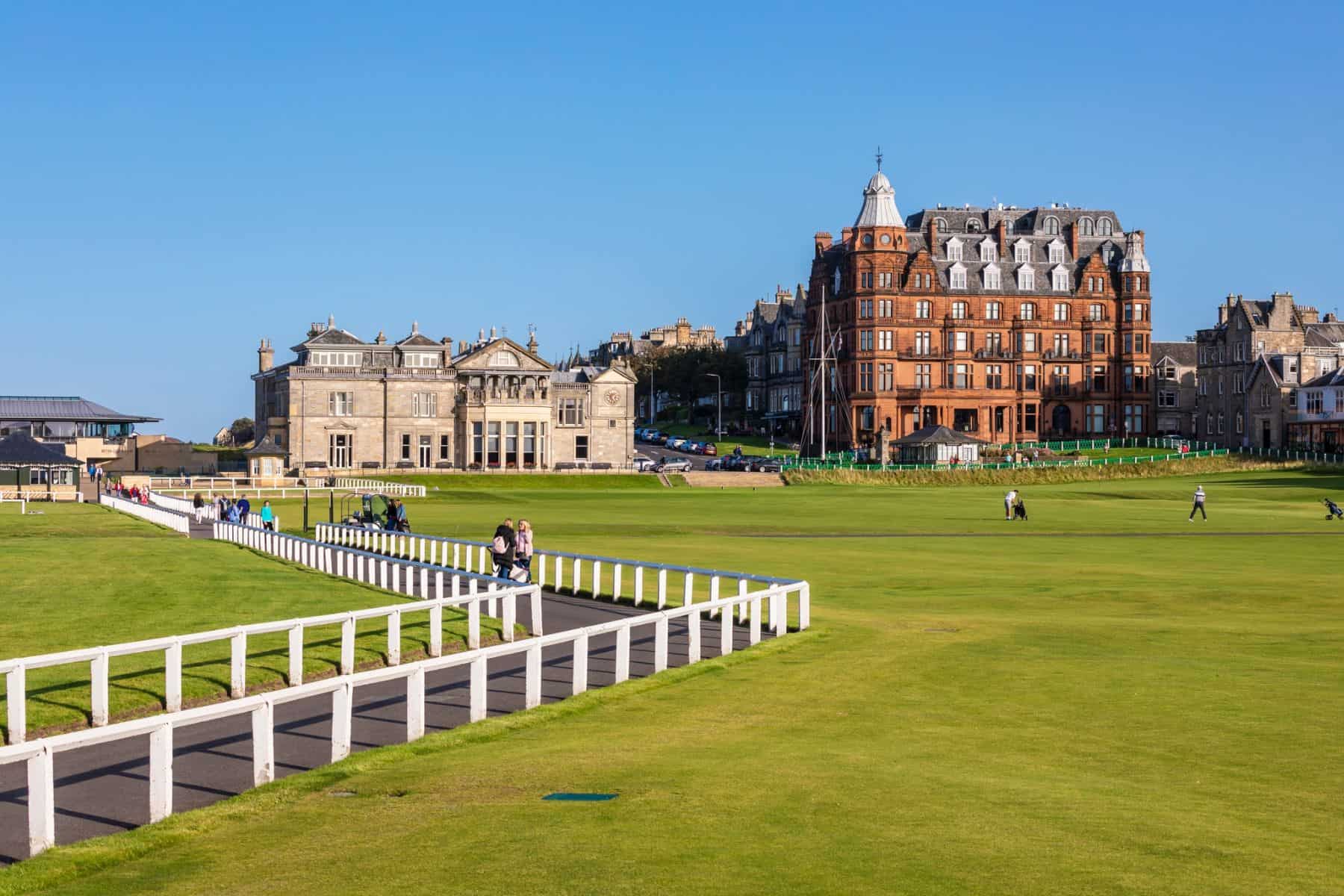
Scotland offers a unique connection to the origins of golf that you simply cannot find anywhere else in the world. Walking these legendary fairways feels like stepping back in time, where every sweeping dune and deep bunker tells a story of the pioneers who originally shaped the game. From the iconic, windswept seaside links to hidden gems tucked away along the rugged coastline, historic scottish golf courses provide a pure challenge that tests both your physical skill and your mental patience. Here, you face the exact same coastal winds, rolling terrain, and unpredictable elements that defined the sport centuries ago. A golf trip to Scotland is about much more than just the final score on your card; it is a pilgrimage dedicated to the atmosphere, the landscape, and the enduring heritage of the game.
1. St Andrews: The Old Course and Beyond
Arriving at the first tee of the Old Course at St Andrews is a transcendent experience for any golfer. It is not merely about hitting a tee shot; it is about connecting with the very soul of the sport. As you wander across these hallowed fairways, you are retracing the precise footsteps taken by every great champion who has ever lived. The entire town of St Andrews breathes golf, and the atmosphere in its medieval streets is just as electric as the action out on the links. Visiting historic scottish golf courses like this allows you to experience the authentic roots of the game up close, far removed from the pristine, manufactured environments of modern professional tours.
Every visiting player dreams of posing for a classic photograph on the iconic Swilcan Bridge. This modest stone structure, originally built for shepherds crossing the burn, has witnessed countless legendary farewells and remains the ultimate symbol of sporting tradition. However, the course itself demands unwavering focus. The infamous Hell Bunker waits patiently to swallow errant shots, testing your nerves and your sand play in equal measure. There is a specific kind of thrill in navigating these ancient hazards, fully aware that the strategic layout has remained largely unchanged for generations.
Beyond the cavernous bunkers and winding burns, the town serves as a treasure trove of Scottish heritage. Ancient cathedral ruins and grey stone university buildings provide a stunning, dramatic backdrop to your round. You can almost hear the echoes of past matches while putting out on the massive, undulating double greens. After finishing your game, wandering through the local pubs, such as the famous Jigger Inn, reveals just how deeply this community cherishes its sporting identity. It is a place where every blade of fescue grass tells a story, making it a mandatory stop for anyone who appreciates golf’s origins. The memories forged on these historic greens will stay with you long after you leave the final hole.
2. Must-Play Historic Scottish Golf Courses Across the Coast
Scotland boasts a wealth of heritage links that stretch far beyond the famous boundaries of Fife. If you are eager to walk the fairways of historic scottish golf courses, you are truly spoilt for choice. Each site offers a distinctly different flavour of the game, shaped by raw coastal elements and centuries of local sporting tradition. Playing these historic venues is about soaking up a rich legacy while testing your modern equipment against timeless natural defenses.
Heading north to the Highlands, Royal Dornoch stands out for its rugged, natural beauty and sheer isolation. The layout feels as though it was discovered organically rather than built by human hands, featuring elevated, plateaued greens and wild gorse bushes that provide a stiff but incredibly rewarding test. It is the kind of breathtaking environment where the panoramic scenery almost distracts you from your swing. Further south along the Golf Coast, Muirfield brings an entirely different level of architectural prestige. Renowned for its clever, concentric circular routing, it ensures that players face the prevailing wind from a different angle on nearly every hole. This esteemed Open Championship venue demands absolute precision and offers a masterclass in strategic course design.
Over on the west coast, Prestwick holds a sacred place in any golf historian’s heart. This remarkably traditional links is where the very first Open Championship took place in 1860. The terrain here is wonderfully quirky and unapologetically old-fashioned, featuring blind tee shots, historic sleeper-faced bunkers, and massive sand hills that make every round feel like a genuine adventure. Tackling Prestwick connects you directly to the 19th-century roots of the game. Whether you are navigating towering dunes or plotting your way around tight coastal burns, these regional gems provide a tangible link to the past while keeping you firmly rooted in the present challenge of firm turf and stiff ocean breezes.
3. How to Make the Most of Your Heritage Golf Adventure
Preparing for a trip to conquer historic scottish golf courses requires a bit more thought than simply polishing your irons. Timing is crucial if you wish to avoid the heaviest seasonal rains. Aiming for late spring or early summer is ideal, as the daylight stretches late into the evening and the fescue turf plays firm and fast. However, Scottish weather remains famously unpredictable even in July, so packing plenty of thin, breathable layers and premium waterproofs is essential for staying comfortable when the clouds inevitably roll in from the sea.
The wind will serve as your constant companion on these traditional, exposed links. Before your trip, practice hitting the ball low, mastering the “stinger” or punch shot, to keep your ball flying under the heavy gusts. Logistically, booking your tee times several months in advance is absolutely vital, as these legendary spots fill up quickly with enthusiastic players from across the globe. Additionally, one of the smartest investments you can make is hiring a local caddie. These seasoned experts know every hidden dip, false front, and secret slope, providing indispensable guidance for those tricky blind shots where the putting surface remains tucked completely out of sight.
If you truly want to touch the historic roots of the sport, you must head over to the Musselburgh Old Course. Officially recognized as the oldest continuously played golf ground in the world, it offers a profoundly rare chance to walk the exact same turf that hosted early Open Championships in the 1870s and 1880s. To heighten the authenticity, you can even hire traditional hickory-shafted clubs and play with a modern replica of the old gutta-percha ball. This immersive experience brings you closer to the true origins of the game than any modern, manicured resort ever could. Walking these ancient holes allows you to fully appreciate the simple, elegant brilliance of early course design, where you focus on the joy of the surroundings rather than just perfecting your scorecard.
Your Next Chapter in Golfing History
Planning a comprehensive trip to these legendary links gives you the unparalleled opportunity to walk the same fairways as the game’s earliest and greatest pioneers. From the cavernous, iconic bunkers of St Andrews to the rugged, wind-battered coastal challenges scattered across the country, these historic scottish golf courses offer a profound connection to the sport’s deepest roots. You can perfectly cap off this journey through time by visiting the Musselburgh Old Course, standing proudly as the oldest continuously played ground in the world. By securing your tee times early, packing for all seasons, and perhaps hiring a local caddie, you ensure that you will savor every single moment of this authentic Scottish heritage. Embrace the raw charm of the original Open Championship hosts, battle the coastal winds, and create your own unforgettable stories on these timeless, storied greens.
