
About Musselburgh Old Course Golf Club
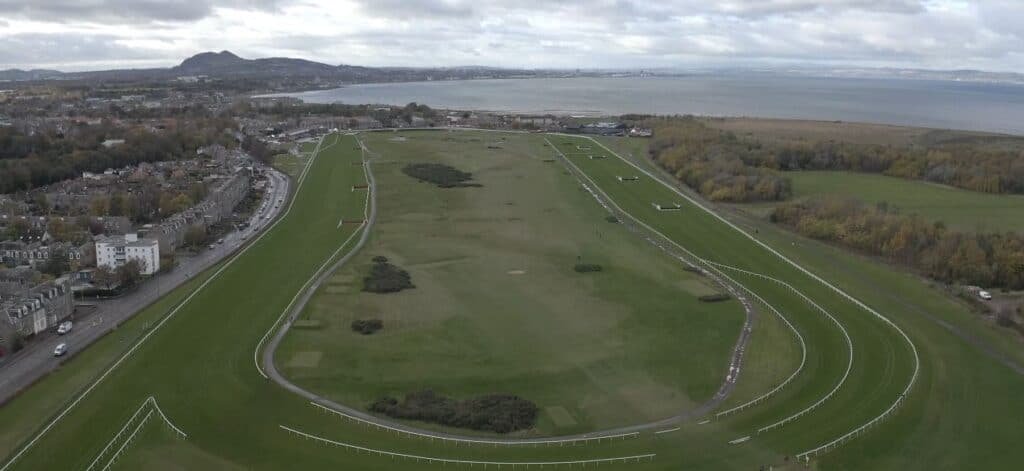
There aren’t many sporting venues with the serene grandeur of Musselburgh Old Course Golf Club. This course feels more like an outdoor archive of human tradition than a sporting venue, set against the East Lothian sea breeze. Every hole represents a chapter in the history of golf, and each guest who crosses its fairways joins an uninterrupted line that dates back more than three centuries.
When Sir John Foulis of Ravelston lost a bet “at Golfe at Musselburgh” in 1672, golf at Musselburgh was first mentioned. The earliest known record of play on what many consider to be the cradle of golf is this charmingly mundane detail that now feels remarkably important. Some even maintain that in 1567, Mary, Queen of Scots, swung her clubs close by—a story that gives the area an almost legendary feel.
In the past, the course itself competed in the Open Championship alongside titans like Prestwick and St Andrews. Legends like Mungo Park, Willie Fernie, and Bob Ferguson were crowned at six Opens held in Musselburgh between 1874 and 1889. These tournaments brought the essence of golf to a town that was passionate about the sport; they were more than just contests; they were declarations of heritage.
The course is small by today’s standards, with nine holes and about 3,000 yards. However, few contemporary courses can match the depth of character concealed by its small size. Its peculiarities add to the allure of Musselburgh Racecourse, where it is completely set. Even hoofprints are recognized by the rules as a natural feature of the racing track where golfers compete. In a time of manicured perfection, that kind of rustic authenticity is uncommon and especially charming.
| Category | Information |
|---|---|
| Location | Musselburgh, East Lothian, Scotland |
| Established | First recorded play in 1672; Club re-established in 1995 |
| Course Type | 9-hole historic links, par 34 |
| Managed By | East Lothian Council |
| Historical Milestone | Hosted The Open Championship six times (1874–1889) |
| Signature Innovation | Invention of the metal-plated “brassie” club |
| Course Feature | Built inside Musselburgh Racecourse; three holes cross the track |
| Equipment Tradition | Players can use modern or traditional hickory clubs |
| Website | www.musselburgholdcourse.com |
The 1995 restoration of the Musselburgh Old Course Golf Club admirably brought back the spirit of the past. Once occupied by the Royal Burgess Golfing Society, the clubhouse has been painstakingly restored to create a warm yet historically accurate environment. It serves as a strikingly successful link between centuries of custom and contemporary hospitality rather than as a relic.
Musselburgh provides a special opportunity for golfers who are visiting: the option to use hickory clubs. Here, swinging a wooden shaft feels very natural, almost ceremonial. The sound of a ball hitting a clubface reverberates in a different way; it is softer, more intentional, and possibly more significant. A lot of people who play with hickories say it’s a spiritual experience that brings them back to the early days of golf. This tradition is remarkably preserved by the club’s Hickory Challenge, a well-known yearly event.
Beyond its notoriety, Musselburgh has made a subtly significant contribution to the development of golf. The metal-plated “brassie” club, a straightforward invention that enabled players to strike confidently off harder surfaces, was created here. More importantly, the instrument used to cut golf holes at Musselburgh is directly responsible for the 4.25-inch diameter of today’s holes. These are the cornerstones of the sport as it exists today, not merely historical anecdotes.
On the course, every hole has a backstory. Between gorse and sand, the third hole requires accuracy. The fourth, which is arguably the most famous, is a long dogleg par four that used to back onto Mrs. Forman’s Tavern, a fabled pub where players would stop in the middle of a round to get refreshments through a window hatch. Golf was always about friendship as much as competition, and even though the tradition is no longer there, the ghost of laughter still haunts that green.
The 19th-century duels brought Musselburgh national fame. The course became a national stage due to the rivalry between local hero Willie Park Sr. and Old Tom Morris of St Andrews. Their games, which were watched by passionate spectators, made it difficult to distinguish between spectacle and sport. A tribute to Scottish pride and a spirit of competition that still reverberates in the air above the fifth tee, Park’s victory over Morris here became a folktale.
The contrasts in Musselburgh are what make it so appealing. It’s ancient yet timeless, straightforward yet elegant. Modern courses strive for innovation, but Musselburgh subtly maintains authenticity. Even though its fairways aren’t perfect, they are authentic—formed by wind, tempered by memory, and touched by centuries of play. Its flaws significantly enhance the experience and serve as a reminder to guests that golf was originally played on living, unpredictable land.
The club is still open to the public and is run with remarkable commitment by East Lothian Council. Despite being modest in comparison to championship venues, the upkeep is extremely effective and respectful of the site’s historical significance. It gives residents a sense of pride in their community. It’s a pilgrimage for tourists, an opportunity to walk where heroes once fought and where history never truly ends.
Additionally, Musselburgh has quietly and sophisticatedly adjusted to contemporary standards. International guests can easily reserve tee times, rent hickory sets, or just drop by for a clubhouse tour. Media personalities like Sky Sports’ Iona Stephen have highlighted its ongoing significance by filming features that demonstrate how history and modernity coexist harmoniously here. Musselburgh is frequently referred to by golf fans worldwide as “the living museum of golf”—a description that seems especially fitting.
Musselburgh’s cultural impact goes well beyond athletics. It represents Scotland’s capacity to uphold tradition while welcoming change. Heritage and innovation can coexist, just as hickory clubs and titanium drivers can. Musselburgh has evolved into more than just a golf course in this way; it now serves as a metaphor for how societies maintain their identity over time.
It’s hard to avoid feeling a sense of belonging to something greater than oneself when standing on the last green. The wind hums softly across the turf, the racecourse curves like a boundary of memory, and the Edinburgh skyline glows in the distance. It’s an inspiring and humble moment that serves as a reminder that although the game has evolved, the spirit that started here has never faded.
The history of golf is being written one swing at a time at Musselburgh Old Course Golf Club, which is more than just a chapter in the game’s narrative. Like this historic stretch of Scottish linksland, it symbolizes not only the origins of golf but also its continued existence, as the game continues to strike a balance between innovation and reverence, as well as progress and grace.

Musselburgh History
When people first see Musselburgh, they often observe how gracefully it wears its age, almost like an experienced craftsman who doesn’t need to explain their method. Without drawing attention, the River Esk flows gently through the town, resembling a flat chronology that connects Roman engineering, medieval trade, and contemporary routines.
When Roman planners arrived, they established a bridge and a fort inland that cemented the town’s significance even before streets had names or markets had stalls. By building a crossing here, they anchored population patterns that would outlive the empire itself and established a route that was incredibly dependable for generations.
Shellfish beds near the shore gave the town its name and served as an early economic engine, shaping its identity and cuisine throughout time. Over time, Musselburgh developed into a market town where coastal trade, milling, and fishing all cooperated like a swarm of bees, each of which played a minor but incredibly powerful role when united.
The town’s character had solidified into something noticeably better by the early 14th century, thanks to experience rather than aspiration. Without expecting payment, the residents of the town took care of the Regent of Scotland when he passed away there in 1332. Later on, their refusal to pay gained them the moniker “The Honest Toun,” which turned out to be incredibly resilient, withstanding both political and economic upheavals.
Throughout the Middle Ages, trade grew steadily, with salt, coal, and wool passing via neighboring harbors. Musselburgh’s harbor served as a particularly advantageous entry point for inland businesses for a period, connecting rural output to more extensive trade channels while maintaining the town’s groundedness in hard work.
Since avoidance was impossible due to geography, conflict arose, as it frequently does. Daily life was momentarily overtaken by the bloodshed that swept across the surrounding area during the Battle of Pinkie Cleugh in 1547. Even so, the community showed a remarkably dependable ability to rebound, reestablishing habits when the army left.
Leisure is one of Musselburgh’s more unexpected legacies, rather than trade or war. Even by today’s standards, the layout of Musselburgh Links, which is generally acknowledged as the oldest golf course still in continuous operation, feels especially avant-garde given its improbable location inside a racecourse. A municipality that embraces change without sacrificing heritage is reflected in the arrangement.
One peaceful afternoon, I recall standing close to the links and observing how golfers and race officials crossed paths. I was struck by how remarkably natural the crossover felt.
Wire mills, net works, and paper manufacture changed employment patterns during the industrial age, further reshaping Musselburgh. In addition to exporting items well outside the town, these enterprises were incredibly effective for their time and helped to instill discipline and skills in the community.
Fishing families along Fisherrow kept up incredibly resilient habits, passing down techniques and tales from generation to generation. A daily reminder that labor was valued and evident in this place was provided by the fishwives who used to confidently walk the High Street while carrying hefty creels.
The town did not hollow out in the late 20th century as industry faded. Rather, it adjusted. With the neighboring relocation of Queen Margaret University, which brought fresh viewpoints and vitality, education became a stabilizing influence. The local rhythm, which combines student life with long-standing neighborhood routines, has significantly enhanced since that change.
Quietly, civic customs persisted. Even though the annual election of an Honest Lad and Lass is merely symbolic, it is remarkably successful in reaffirming common ideals. During a time when many communities find it difficult to define their identities, Musselburgh depends more on tradition than on innovation.
Today’s walkways and plaques along the River Esk encourage introspection without spectacle. With the help of graphic markers, children learn phrases that reflect values that have been held for ages. Instead of archiving history, the municipality keeps it accessible by incorporating basic storytelling into public spaces.
Its equilibrium is what makes Musselburgh so appealing. Without relying too much on any one function, it can serve as a historic settlement, a commuter town, and a living community. Over the years, that adaptability has been especially helpful.
Instead of portraying its past as completed, Musselburgh lets it continue to influence decisions and attitudes in subtle ways. Instead of being maintained, the town seems prepared, passing on lessons that are still applicable, convincing, and subtly uplifting.
Best time to visit Musselburgh
Musselburgh’s personality is evident everywhere you look, as it is mirrored subtly on the River Esk’s surface and carved into every nook and cranny of its cobblestone streets. However, understanding when to go is just as important as understanding why. Similar to a subdued tune, Musselburgh unveils more of itself during the interludes—between waves of tourists, after the crowds have subsided, and before winter closes its doors.
Usually, the first actual invitation comes in late May. The air becomes more softer, and the daylight begins to last well into the evening. The aroma of fresh flowers from Inveresk Lodge Gardens marks the transition from dormancy to vitality, and locals resume their leisurely strolls by the river. Those who want some warmth and tranquility without the stress of peak season will find it especially helpful during this time. Musselburgh is bustling with bustle by the time July rolls around. Ice cream vendors show up like clockwork, the racecourse is buzzing with excitement, and the historic Links golf course is teeming with eager golfers. These are the busiest weeks in town, and the enthusiasm is unquestionably infectious. The streets feel congested, restaurants buzz louder, and lines are longer as a result of this vibrancy.
If you think that balance is beautiful, September can be the best month for you. The crowds have subsided, the light has a deeper, almost dramatic tone, and the weather is still delightfully moderate. Walking at Fisherrow Harbour in this month can be very peaceful because of the boats’ rhythmic gentle bobs, the longer shadows formed by the sky, and the notably sharper sea wind. One September morning, I sat on a bench on the Esplanade and watched elderly residents feed birds and converse in a Scots dialect. That moment had a very reassuring quality to it, the kind you tuck away and come back to on bad days. Early autumn in Musselburgh doesn’t have to make an impression; it just appears.
Slowly, autumn gives way to calmer days. Cooler mornings arrive in October, and by November, the town’s energy turns inward. The days get shorter, yet the atmosphere stays light. It turns reflective instead. Local pubs seem more intimate, the high street lights start to glimmer earlier, and the town as a whole seems to catch its breath.
Winter has its allure for people who are drawn to calm and atmosphere. Although there isn’t much snow, the occasional frost gives plants and rooftops texture. The breeze from the Firth of Forth is more piercing, but it also creates room—room for leisurely strolls, contemplative coffee, and more authentic interactions. Despite being unusually quiet in the winter, Musselburgh never feels deserted.
Next comes spring, which is incredibly gorgeous but frequently underappreciated. Fresh foliage and bird music abound throughout April and early May. Wildlife starts to appear in the Levenhall Links Nature Reserve, and the town’s green areas open up like vows fulfilled. These are the weeks when Musselburgh is most successful at attracting new tourists and is especially successful at persuading returning visitors to remain a little longer.
The goal of scheduling a visit here is not to achieve perfection. Finding the rhythm that works for your pace is key. The soul is carried by spring and autumn, but summer takes center stage. The ideal moment frequently comes with a gentle nudge from the sea air and a beam of soft Scottish light rather than with much fanfare, whether you’re following coastal paths or enjoying coffee by the Esk.
Things to do in Musselburgh
Musselburgh waits for attention instead of yelling. Its style is that. This seaside village, which is only six miles from Edinburgh, confidently embraces history. When you slow down, Musselburgh provides something quite powerful: a feeling of place that stays with you long after you’ve left.
The speed is often set by the racetrack. Known as the oldest in Scotland, it began holding events in 1816. The experience is quite engrossing, whether you’re wagering on the horses or just taking in the pageantry. Race day is viewed by the locals as a reunion. Even the sporadic drizzle doesn’t dampen the mood as families congregate and laughter soars over the track. Musselburgh Links is hiding in plain sight nearby. Golfers have been playing on these historic fairways, which are framed by the racecourse itself, for more than six centuries. It’s more like entering a living archive than playing sports when you’re with traditional hickory clubs here. The age of the course is embraced rather than flaunted. Every shot feels rooted in time, and the turf retains memories.
A new rhythm is provided by Newhailes House for individuals who are drawn to more subdued beauty. The estate’s interiors, which have been meticulously restored and preserved, are especially intriguing; each chamber reveals layers of family history and architectural peculiarities. Wandering around the grounds is encouraged. I followed a path through some woods to a clearing where the silence seemed purposeful rather than accidental.
The Brunton Theatre’s vibrancy stands in stark contrast to the silence. Although it appears modest from the outside, this location has grown to be the town’s cultural hub. It promotes connection via narrative, from local jazz evenings to children’s panto productions. I witnessed a Shakespearean adaptation one evening that had everyone in the audience leaning forward, demonstrating that size is not a need for significance.
Fisherrow Harbour provides true sea air if you’ve been craving it all day. Gulls soar overhead, boats softly drift, and the ocean breeze whispers tales only fishermen can relate. I recently went to see an elderly man mending nets next to his boat while softly whistling. Do not hurry. Not a show. Just the beat. The grounding came as a surprise.
There are expansive views of the Firth of Forth from the nearby Musselburgh Beach. While couples walk in time with the tide, children carry buckets and run toward the water. The artwork, which is formed like a mussel shell and acts as both art and an anchor, gleams in the sunlight. This section of beach is transformed into a playground for barefoot fun on warmer days.
The Musselburgh Museum, which is tucked away along the High Street, provides a very effective dose of local information. Seasons change the exhibits, but the spirit is always the same: community-curated and fervently maintained. Vintage fishing gear, old maps, and military antiques all convey tales that are profoundly ingrained in daily life.
There’s also Luca’s. Scoops have been served there since 1908 and are a combination of social ritual and ice cream business. Lines wrap down the street on weekends, particularly in the spring. After ordering a solitary vanilla cone with raspberry sauce, I took a seat on an outdoor bench. A grandfather showed his grandchild traffic signs. It was simultaneously all and nothing.
Follow the River Esk Walkway to slowly return to nature. It is made to be uninterruptedly welcoming and is lined with benches, plants, and story plaques. Kids interact with secret artwork along the way, and adults give pets a nod. Even the river has its own slow, purposeful flow.
Quiet and unperturbed, Carberry Hill waits just outside the town. Mary Queen of Scots gave herself up here in 1567, on this forested rise. A monument, a few trees, and the weight of history are all that are present—no visitor center, no well planned hoopla. In places like this, you can feel time roll back on itself as you stand there.
Musselburgh is unassuming. It is not dependent upon spectacle or gimmicks. Rather, it honors people who arrive with an open mind. Its beauty slowly comes to light, like darkroom film. You’ll depart with something lighter—and somehow larger—than you anticipated, whether you came for the racing, golf, sea air, or just the leisurely pace of a town that remembers.