

It may surprise you to see a group of Gen Zers congregate on a putting green, but it’s happening—and loudly. Many of today’s younger golfers are swinging under stadium lights with GoPros rolling and speakers blaring, rather than on quiet courses and whispered praises. Golf has had a revitalizing modern reimagining that successfully combines tradition and innovation.
The narrative has been reversed by youthful athletes who have embraced internet content. YouTubers like Garrett Clark have established devoted fan bases by documenting unstaged occurrences, such as friendly rivalries, awkward shots, and clutch putts, rather than by winning awards. These are digital diaries that present a surprisingly relatable view of the sport; they are neither highlight reels or instructional movies.
Key Drivers Behind Golf’s Youthful Comeback
| Area of Impact | Notable Elements |
|---|---|
| Digital Media | YouTube creators, TikTok golf clips, Netflix’s Full Swing |
| Celebrity Endorsements | Steph Curry, Josh Allen, and digital influencers amplifying golf’s cool factor |
| Social Venues | Topgolf, PopStroke, and urban mini-golf spaces acting as casual entry points |
| Fashion and Fitness | Athletic wear replaces khakis; physical training content gains traction |
| Tech-Driven Practice | AI swing analyzers, GPS apps, and launch monitors speed up learning |
| Pandemic Impact | Golf remained open, safe, and appealing during lockdowns |
| Cultural Inclusion | Community outreach, youth clinics, and scholarships expanding golf’s audience |
Meanwhile, Full Swing on Netflix further popularized golf as a form of entertainment. In a style more akin to reality TV than conventional sports documentaries, it tracked PGA professionals off the course and revealed frustration, friendship, and ambition. It wasn’t just about who prevailed; it was also about who faltered under duress or found meaning in failure. This was a really creative emotional access point for those who were not familiar with the silent intensity of golf.
Celebrity athletes and influencers have also been very important. Fans pay attention when celebrities like Josh Allen or Steph Curry share their golf swings. Their enthusiasm is very contagious. They normalize the notion that street fashion, other sports, and lifestyle interests can coexist with golf. Golf is able to lose the idea of exclusivity thanks to this modest reframing.
The accessibility of the game has been expanded to a whole new level by Topgolf and related establishments. These places provide a stress-free first impression with their flashing lights, informal menus, and lack of a dress code. Many novices are simply chasing points on a screen with buddies, not even realizing they are entering a sport with centuries of heritage. This relaxed starting position is especially helpful for breaking down antiquated preconceptions.
A social and skill-driven version of golf has arisen. Although players still want for advancement, they now have access to a wide range of tools that make it seem possible to get better. Near-instant feedback is provided by launch monitors, swing coaches driven by AI, and GPS-enabled apps. This combination of athleticism and analytics is quite effective for younger viewers used to real-time data.
Golf content has also subtly been influenced by fitness culture. Swing tutorials now include speed training, rotational strength exercises, and stretching exercises. Young golfers frequently resemble multisport athletes more than members of country clubs. The sport is repositioned as hard rather than leisurely by its physicality, which is consistent with trends in performance-oriented health.
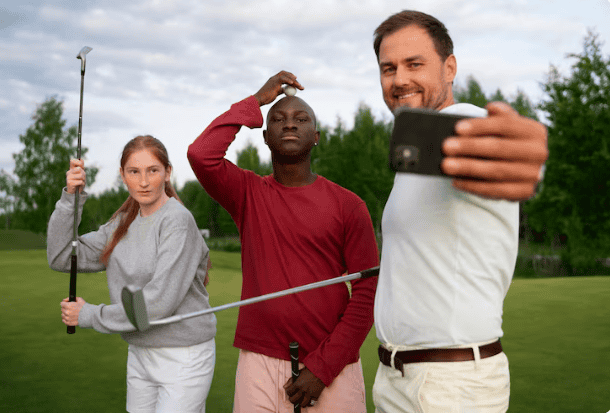
Fashion has also changed. Performance joggers have taken the role of traditional khakis. Clothing lines that wouldn’t be out of place at a gym or skate park are now being released by brands that previously catered only to seasoned members. When compared to designer sportswear, golf apparel is surprisingly inexpensive, youthful, and useful, making it a striking piece.
Golf became one of the only possible outlets during the pandemic when indoor activity was prohibited. It was especially safe because it was outside and had built-in distance. That initial pandemic cycle marked the beginning of a lifelong passion for many people in their 20s. They found a sport that provided quiet victories, companionship, and headspace.
Stories of pals tracking drives, sharing birdie putts, and even making jokes about triple bogeys were all over social media, I remember. A sense of discovery pervaded the atmosphere, akin to discovering an ancient text that somehow resonated with the contemporary.
Golf’s leisurely speed is what makes it particularly appropriate for this time period. It promotes presence, contemplation, and dialogue. Those lengthy strolls in between pictures can be unexpectedly calming in a distracted digital world. The game has a way of making moments unforgettable, whether you’re playing it alone or with company.
Nowadays, a lot of younger players plan informal competitions, weekend trips, and even first dates that revolve around golf. It has taken the role of the bar as the preferred social location for certain people. That change says a lot. It indicates that the game is being actively selected rather than grudgingly inherited.
Legacy organizations have noticed. Initiatives to promote diversity are growing. The sport is reaching new audiences thanks to community partnerships, youth clinics, and scholarships. These initiatives have greatly lowered the obstacles that formerly kept many individuals away by emphasizing visibility and accessibility.
The fact that golf hasn’t had to give up its origins in order to achieve its comeback is very appealing. Young players are instead eschewing the formality and embracing its ageless etiquette and strategic complexity. Instead of rejecting the customs, they are enthusiastically and curiously reinterpreting them.
