

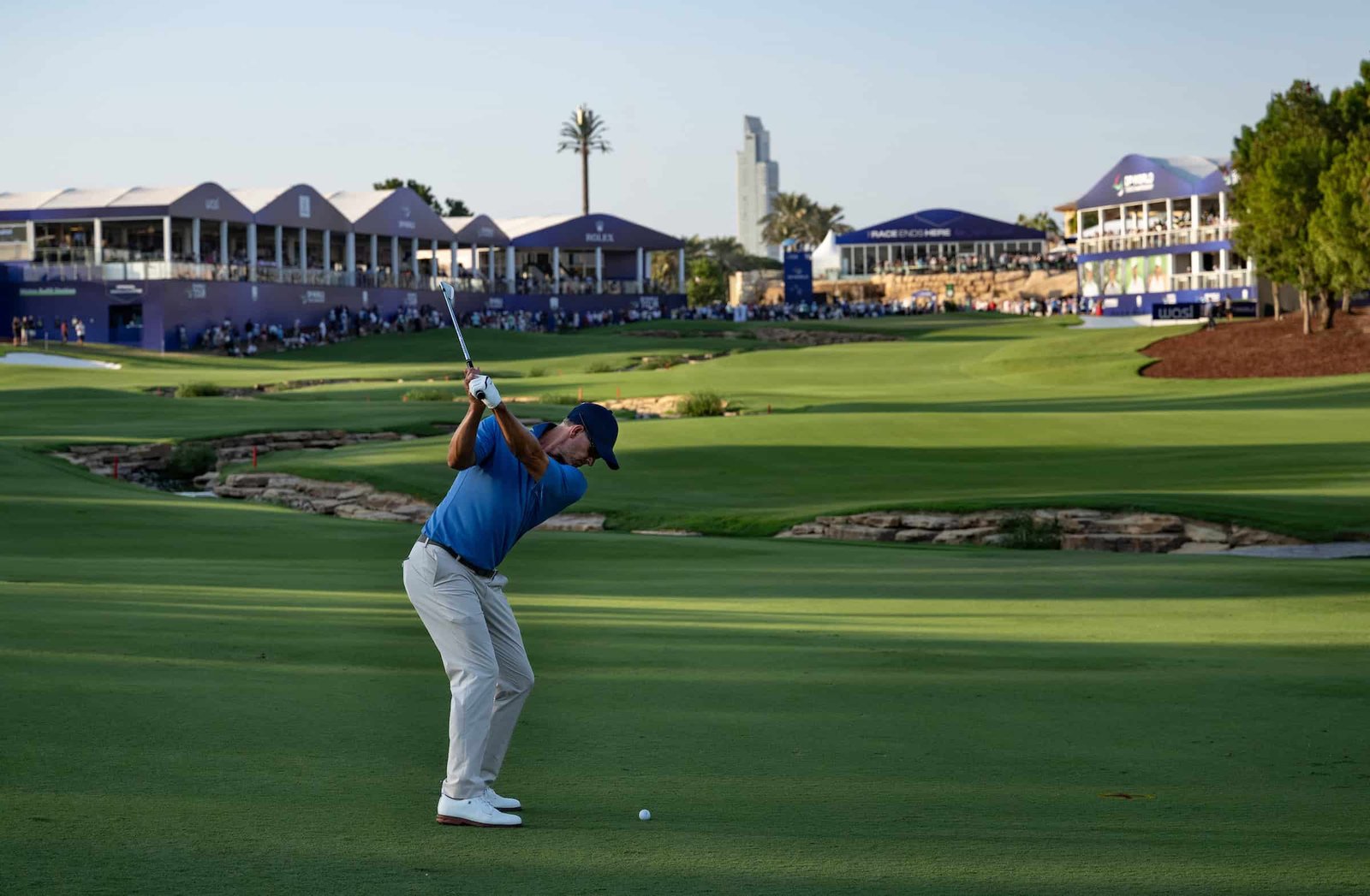
Golf is subtly becoming into one of the most potent platforms for wealth, power, and international recognition. The game that used to whisper exclusivity is now speaking in terms of accessibility and creativity. Guy Kinnings, CEO of the Ryder Cup Europe and DP World Tour, is at the center of this change, spearheading a strategic development that has altered golf’s cultural and commercial narrative.
Kinnings has done a remarkable job of transforming legacy into momentum since taking over in 2024. The DP World Tour has experienced a highly effective reorganization under his direction, which has revitalized the sport’s international presence. Engagement numbers have significantly improved when “The Back 9” tournaments and a new playoff structure were introduced. Golf’s popularity isn’t waning but rather growing, as evidenced by the 7% increase in spectator attendance and the 13% increase in broadcast viewership reported by Sky Sports.
| Category | Details |
|---|---|
| Key Trend | The transformation of golf into a modern luxury and lifestyle platform. |
| Main Leader | Guy Kinnings – CEO of the DP World Tour and Ryder Cup Europe. |
| Strategic Changes | Global restructuring of tournaments, new “Back 9” events, and playoff models. |
| Performance Growth | Spectator attendance rose by 7%, while Sky Sports viewership increased by 13% in 2024. |
| Demographic Shift | 30% of fans are now Gen Z and Millennials, signaling broader audience appeal. |
| Global Reach | Expanding markets in Asia-Pacific, particularly in China, India, Japan, and Korea. |
| Luxury Partnerships | Rolex, BMW, and other premium brands deepening golf’s cultural and commercial value. |
| Cultural Impact | Golf shedding its elitist image through innovation, inclusivity, and digital storytelling. |
| Reference |
Their common notion of experience is what unites this evolution and the larger trajectory of luxury. Conventional sponsorships are insufficient today. The audience of today is looking for emotion, authenticity, and immersion. Under Kinnings’ direction, golf has developed into a dynamic ecology where sophistication, sport, and storytelling all coexist harmoniously.
The energy conveys more information than the numbers do. The PGA Tour saw its biggest increase in viewership since 2018 in 2025, up 17%, according to CBS Sports. Other major sports are having trouble maintaining their popularity at the same time as this increase. MLB’s All-Star Game viewership further declined, the NBA’s finals ratings declined, and the NHL’s U.S. playoffs experienced reductions. On the other hand, golf appears to have found its groove in a shifting media environment.
Kinnings credits adaptation with this resiliency. In reference to how the pandemic changed public participation, he states, “We’ve been encountering sold-out events, which we’ve never had before.” Golf was one of the only sports where participation was safe during the lockdowns. An brand new generation of fanatics was the outcome. He continues by saying, “People picked it up then and never let it go,” highlighting how the sport transformed an unanticipated interruption into a sustained cultural advantage.
But perception is where the true change occurs. Golf is no longer viewed as an old boys’ sport associated with tweed and hierarchy. It’s evolving into a vibrant, young, and welcoming platform. Kinnings acknowledges that golf was once thought to be a male-dominated, middle-aged sport. “Those barriers are being dismantled.” The sport has grown especially creative in drawing in new audiences by emphasizing the spectator experience and digital connectivity.
This strategy fits with the trend in luxury toward immersion and narrative. Golf is establishing itself as more than just a sport; it’s evolving into a platform for lifestyle, much how Porsche uses gaming experiences and cultural partnerships to engage potential customers. Tournaments are as much about culture and community as they are about competitiveness, according to both brands and fans.
It is supported by the demographic data. Gen Z and Millennials currently make up about one-third of DP World Tour fans, and the Ryder Cup has an even bigger percentage. According to LIV Golf, 71% of its viewers are between the ages of 18 and 34. This is an impressive growth into demographics that were previously thought to be inaccessible by conventional marketing. These fans communicate in a unique way, appreciating social interaction, individuality, and personality.
Kinnings is naturally aware of this change. He says, “We use the players themselves—they know how to use social media.” “They understand that creating their own brands aids in the development of ours.” Because of this mutually beneficial relationship, professional golfers are now ambassadors for both the game and a whole way of life that is based on accuracy, perseverance, and drive.
Golf’s partnership with luxury is also contributing to its revived glitz. Collaborations with BMW and Rolex stand for more than just sponsorship; they are a sign of our common ideals of durability, quality, and craftsmanship. Since its 2017 inception, the Rolex Series has remained one of the sport’s most valuable assets. Each event, which includes competitions like the Genesis Scottish Open and the DP World Tour Championship in Dubai, offers 8,000 Race to Dubai ranking points and $9 million in prize money. It’s more than just playing; it’s about putting up a show of distinction.
“BMW and Rolex both have amazing ambassadors,” adds Kinnings. “These collaborations help us tell our story more effectively.” The tactic is extremely successful, giving luxury goods direct access to wealthy, devoted, and aspirational customers. Nearly 90% of Fortune 500 CEOs play golf, according to research, and golfers are much more likely than the typical sports audience to purchase high-end products. It’s easy to understand why tee time has drawn special attention from luxury marketers.
However, the billion-dollar struggle to create golf’s next big attraction goes well beyond fairways. The battle is being fought online and across continents. China and India have made significant investments in golf events and facilities, making Asia-Pacific a new frontier. Japan and Korea continue to be incredibly robust markets, supporting regional development and maintaining the sport’s cultural reputation. In the meantime, places like Dubai are completely changing the landscape of golf by transforming deserts into exquisite examples of precisely green architecture.
The emergence of Dubai as a golf capital is especially significant. With its unique combination of top-tier play and opulent hospitality, the city’s DP World Tour Championship embodies everything golf’s contemporary identity seeks to be: approachable, aspirational, and boldly international. In a similar vein, golf’s development into new demographics and experiences is exemplified by the Hero Indian Open and Zozo Championship in Japan. Every event is a declaration of advancement and potential rather than just a competition.
The partnership between golf and digital technologies has also had a profoundly revolutionary effect. Interactive broadcasts keep younger viewers interested, events incorporate virtual access, and players connect directly with fans on social media. With its vibrant visuals, live music, and shorter rounds, LIV Golf’s format demonstrates how the sport is adjusting to contemporary attention spans without sacrificing its core values. The story of golf feels both forward-looking and grounded as a result of this development.
However, societal transformation is arguably the most significant. The leadership of the sport has acknowledged that inclusion is now necessary and not a choice. Golf’s image is being significantly changed by new initiatives that support female participation, youth development, and environmental responsibility. In addition to being morally right, these programs are very effective at guaranteeing lifespan. They portray golf as a reflection of the virtues of contemporary society—conscious, balanced, and interconnected.
This makeover is especially remarkable since it strikes a balance between reinvention and veneration. Golf is still fundamentally a game of accuracy, endurance, and emotional restraint. However, its presentation has changed, becoming more human, quicker, and brighter. Golf no longer feels exclusive in places like Dubai, Singapore, or Scotland—it feels vibrant.
